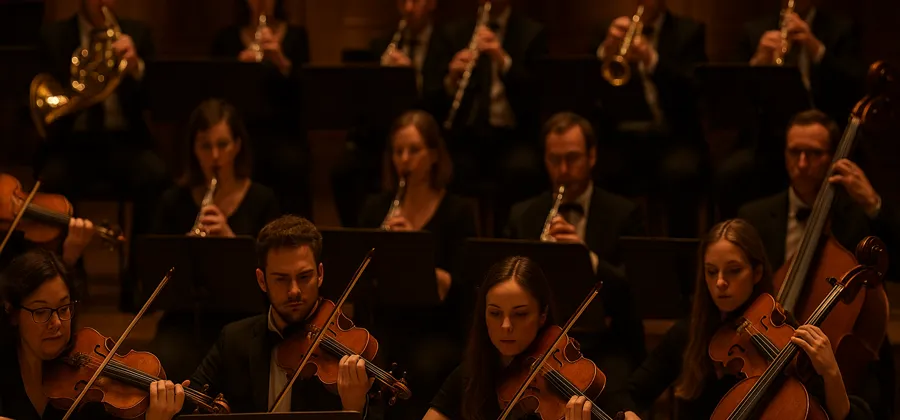
Tchaikovsky's catalogue spans more than 170 works — six symphonies, three ballets, eleven operas, three major concertos, the celebrated 1812 Overture, and a wealth of chamber music, piano miniatures, and songs. This guide introduces his most significant and enduring compositions.
The Symphonies
Tchaikovsky wrote six numbered symphonies between 1866 and 1893, along with the programmatic Manfred Symphony (1885). His symphonies trace an arc from the student work of the First through to the shattering emotional directness of the Sixth — and each occupies a distinct place in the repertoire.
| Symphony | Nickname | Year | Key Character |
|---|---|---|---|
| No. 1, Op. 13 | "Winter Daydreams" | 1866 | Lyrical, Russian folk-influenced, his earliest symphony |
| No. 2, Op. 17 | "Little Russian" | 1872 | Bright, colourful; uses Ukrainian folk melodies |
| No. 3, Op. 29 | "Polish" | 1875 | Five movements; the only one in a major key |
| No. 4, Op. 36 | — | 1878 | Fate motif; emotional intensity; dedicated to Von Meck |
| No. 5, Op. 64 | — | 1888 | Horn motto theme; triumphant finale; widely beloved |
| No. 6, Op. 74 | "Pathétique" | 1893 | His final work; ends in a slow, fading lament |
Where to Begin
New to Tchaikovsky's symphonies? Start with the Fifth Symphony — its sweep, drama, and famous slow movement make it an ideal introduction. Then explore the shattering profundity of the Sixth (Pathétique).

The Ballets
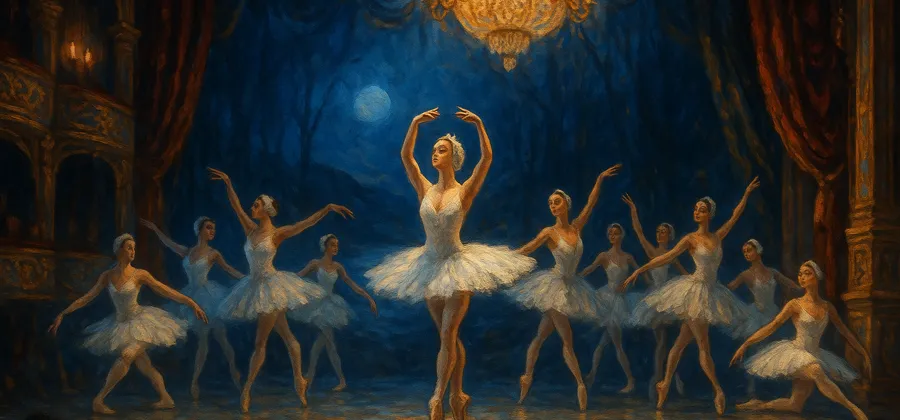
Tchaikovsky's three full-length ballets stand as the supreme achievement of Romantic ballet music. Before him, ballet scores were generally regarded as functional accompaniment — pleasant, rhythmically reliable, and easily forgotten. Tchaikovsky changed this entirely.
Swan Lake Op. 20
1876 — His first ballet. Initially poorly received, it was recognised as a masterpiece after his death. The score contains some of his most iconic melodies, including the swan theme that has become one of the most recognisable in classical music.
Sleeping Beauty Op. 66
1889 — Many consider this Tchaikovsky's finest ballet score. Its architectural grandeur, melodic richness, and range of character pieces reveal a composer at the absolute height of his powers. Marius Petipa called it the greatest collaboration of his choreographic life.
The Nutcracker Op. 71
1892 — His final ballet and the world's most-performed. The famous Suite extracts eight movements from the full score. The second act, set in the Kingdom of Sweets, introduced the celesta — an instrument Tchaikovsky discovered in Paris — as the voice of the Sugar Plum Fairy.
The Operas
Tchaikovsky wrote ten completed operas, of which two stand apart as works of lasting greatness. Though his operas are less universally performed than his ballets and symphonies in Western concert halls, they are central to the Russian opera repertoire.
Eugene Onegin Op. 24
1879 — "Lyric scenes" after Pushkin's verse novel. Intimate, psychologically subtle, and deeply personal. Tchaikovsky identified strongly with Tatyana's rejected love letter. Contains the celebrated "Letter Scene."
The Queen of Spades Op. 68
1890 — After Pushkin's short story. Darker and more dramatic than Onegin; a study in obsession, fate, and madness. Its orchestration is among the most powerful he ever achieved.
Mazeppa Op. 50
1884 — A Ukrainian historical subject. Less frequently staged but contains powerful scenes, including the famous battle sequence and the lullaby.
Iolanta Op. 69
1891 — His final opera; a one-act lyric drama about a blind princess. Intimate and luminous; often paired with The Nutcracker, which premiered on the same evening.
Concertos & Major Orchestral Works
Piano Concerto No. 1 Op. 23
1875 — The most popular piano concerto in the world. Its thundering opening is instantly recognisable. Nikolai Rubinstein famously dismissed it as unplayable at its first hearing.
Violin Concerto Op. 35
1878 — One of the four supreme violin concertos of the 19th century. Composed in just a few weeks in Switzerland. Its lyrical slow movement is one of his most beautiful inspirations.
Variations on a Rococo Theme Op. 33
1876 — For cello and orchestra. A graceful tribute to Mozart's classical style, beloved by cellists for its elegance and expressive range.
Romeo & Juliet —
Fantasy Overture, 1869 (rev. 1880). His first undisputed masterpiece. The love theme is among the most famous melodies in all of classical music.
1812 Overture Op. 49
1880 — Composed for the consecration of Christ the Saviour Cathedral, Moscow. Tchaikovsky himself had mixed feelings about it. The world has disagreed ever since.
Serenade for Strings Op. 48
1880 — Among his most lyrical works. The waltz movement and closing Russian finale are beloved by string players and audiences alike.
